
Anatomical breast implants: all you need to know before you select them
Anatomical implants are one of the most popular options among patients seeking a harmonious and natural result in breast surgery. They are designed to imitate the shape of the breast, adapting to each woman’s anatomy and offering a discrete, balanced result.
Before choosing this kind of implant, it is important to understand what they are like, what benefits they offer and in which cases they are particularly recommended.
What are anatomical implants?
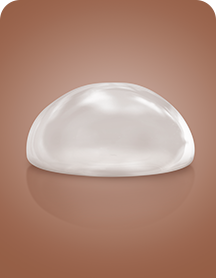
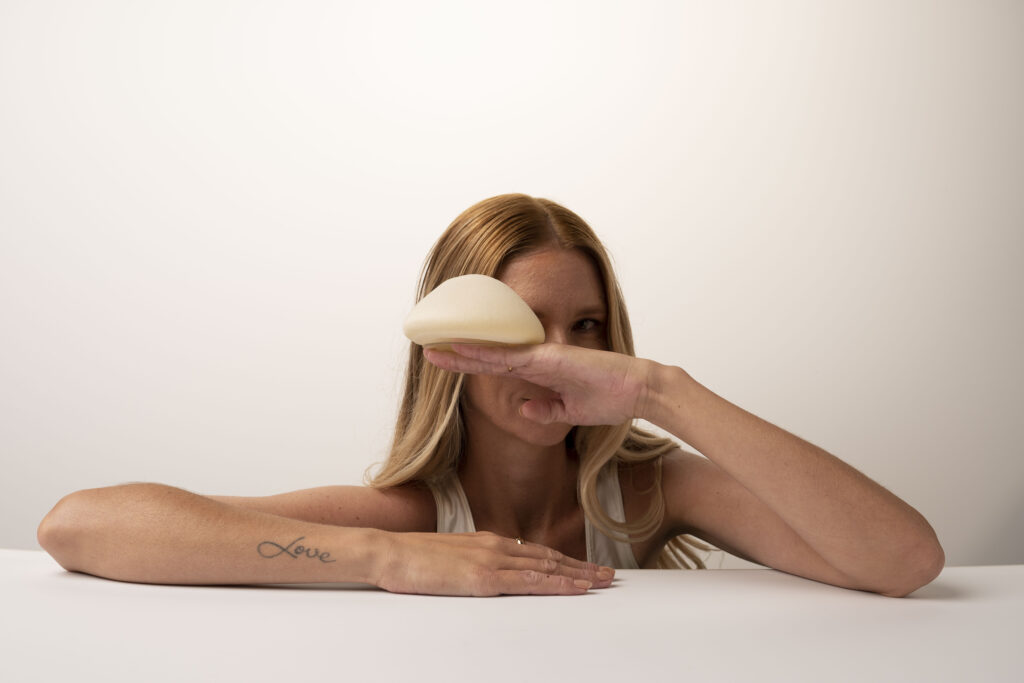
Anatomical implants, also known as teardrop implants, are designed to replicate the distribution and natural fall of the breast’s volume, with a greater projection at the lower pole and a smooth transition to the upper pole, with a balanced volume and without being excessively prominent, although there are also other types of anatomical implants on the market, such as those in the Silimed BioDesign line.
This design gives a result that is very close to the breast’s natural appearance.
Shape and main features
The main features of anatomical implants are:
- Similar shape to the breast’s natural anatomy
- Adaptable to the height and width of the chest
- Different bases and projections to adapt to each biotype
These features make the end result particularly harmonious and natural looking.
Differences to round implants
The main difference between anatomical implants and round implants lies in the shape:
- Anatomical implants prioritise a natural appearance
- There are different projections within the Silimed implant range, offering more discrete or more pronounced results, depending on the patient’s wishes. The difference in the projections depends on the two different lines of implants.
- BioDesign line: low, medium, high and extra high
- Standard line: extra high and extra low
- Round implants in the BioDesign line offer increased volume in the upper pole and a more visible, pronounced cleavage
- Anatomical implants usually have more visually discrete results
The choice between round or anatomical implants always depends on the aesthetic goal, the patient’s anatomy and the surgeon’s final decision to fulfil the patient’s wishes according to the different biotypes.
Benefits of anatomical implants
Anatomical implants are known to offer natural results, adapted to each patient’s body.
More natural result
Thanks to their design, these implants give the breast a natural shape and fall, being particularly indicated for patients who do not want a very pronounced cleavage.
Better adaptation to the shape of the breast
Anatomical implants particularly suit patients seeking a balanced result that is proportionate to their biotype.
In which cases anatomical implants are recommended
The cases in which the use of anatomical implants is recommended is a decision taken by the surgeon together with the patient. It is a joint decision, so there are no concrete, specific cases as each surgery and each patient is unique.
Patients seeking a natural outline
This kind of breast implant is often recommended for women who want to improve the volume of the breast while maintaining a natural appearance, with no abrupt, marked changes to the outline.
Situations in which they are more effective than round implants
Anatomical implants can be particularly effective in certain surgeries, although the final decision depends on the surgeon and the patient’s expectations. Anatomical implants can be used in:
- Breast reconstruction
- Correcting breast asymmetry
- Augmentation surgeries seeking more natural results adapted to the patient’s biotype
Post-surgical care for anatomical implants
As with any breast surgery, post-surgical monitoring and medical check-ups are essential.
Potential complications
The potential complications are the same for any breast surgery and will depend on various factors such as the surgical technique, the patient’s anatomy and lifestyle and compliance with medical recommendations.
Post-surgical care
Among the most important things to do are:
- Follow the surgeon’s indications
- Use a recommended post-surgical bra
- Avoid excessive strain in the initial weeks
- Attend scheduled medical check-ups
What are Silimed’s anatomical implants like?
Silimed has different shapes of anatomical implants which adapt to each woman’s biotype to get a more natural result. The implants adapt to the woman’s outline and not the other way around.
What characterises Silimed’s anatomical implants?
Silimed’s anatomical implants are developed to adapt to each woman’s biotype, offering different combinations of base and projection, all within the BioDesign range.
There are up to three different shapes of anatomical implants made by Silimed:
- Natural: teardrop-shaped implants with a round base, recommended for patients who want a subtle, natural filling at the mid and lower part of the breast, with a balanced volume and discrete result compared to round implants.
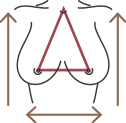
- Enhance: anatomical breast implant with an oval-shaped base, suitable for women with a long, narrow chest, filling the transition between the thoracic wall and the upper pole of the breast thanks to the enhanced filling of the upper pole, giving a natural result.
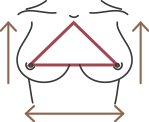
- Nuance: anatomical implant with an oval-shaped base, suitable for women with a short, wide chest so that it can fill the lower pole specifically, correcting the appearance of wider, separated breasts at the sides.

Natural
Anatomical implant
Recommended for women who want a subtle, natural filling at the mid and lower part of the breasts, with a more balanced volume and without being excessively prominent.
Round base
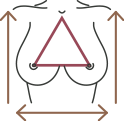
Proportional height and width

Enhance
Anatomical implant
Suitable for women with a long, narrow chest, gradually filling the transition between the thoracic wall and the upper pole of the breast thanks to the enhanced filling of the upper pole.
Oval base
Greater height and narrower
Nuance
Anatomical implant
Suitable for women with a short, broad chest to enhance breasts with a fuller lower pole, especially on the sides, correcting the appearance of wider or separated breasts.
Oval base
Less height and wider

These anatomical implants are available in two different surfaces True Texture® (micro-textured implants) and Pure Polyurethane ® (polyurethane foam-coated implants) with up to four different projections to obtain the result desired by the patient.
Specific benefits of Silimed implants compared to other brands
Among the different aspects are:
- Wide variety of anatomical models
- Design oriented to the patient’s personal biotype
- High-performance cohesive silicone gel. The membranes have a Low Bleed treatment, with multiple layers of elastomer, which form the membrane of the implant.
- Up to four different projections, from low to extra high
FAQs about anatomical implants
Do anatomical implants look natural with tight clothing?
Yes, their design provides a discrete, natural-looking result, even with tight clothing.
How do anatomical implants behave when lying down?
Thanks to the properties of the highly cohesive silicone gel, anatomical implants behave with stability and predictability in different positions. This kind of gel is designed to maintain the cohesion and shape of the implant, without excessive rigidity, which contributes to a progressive adaptation of the breast, in both an upright and lying position1,2.
What is the difference in price for surgery compared to round implants?
The price does not only depend on whether the implant is anatomical or round. There are different factors that affect the price of the implant or the breast surgery.
The price of the breast surgery will depend on the surgeon who performs the procedure. It is the surgeon who assesses the surgical technique, type of procedure, type of implant (shape and surface) and follow-up after the breast surgery. In these cases, each surgery and each patient is unique, so this needs to be assessed on an individual basis.
- Stevens, W. G., Calobrace, M. B., Alizadeh, K., Zeidler, K. R., Harrington, J. L., & d’Incelli, R. C. (2018). Ten-year core study data for round and shaped breast implants with cohesive silicone gel. Plastic and Reconstructive Surgery, 141(4S), 7S–19S.
- FLEMING, D. (2008). Polyurethane foam covered breast implants. En Peters, W. (Ed.), Biomaterials in Plastic Surgery: Breast Implants (pp. 95–120). Oxford: Elsevier.