
Size 90 breast augmentation: what it’s like, results and advice
Breast augmentation to size 90 is one of the options most commonly requested by patients seeking results that are proportionate, natural and in alignment with their body. However, the final size depends not just on the volume of the implant, but also on your anatomy and the circumference of your bust.
In this guide, we explain clearly what it means to have size 90 breasts, how this is measured, which implant surgeons tend to recommend and how to achieve a natural and lasting result.
What is breast size 90 like?
In Spain, size “90” corresponds primarily to the bust circumference, not the size of the breasts themselves.
This means that two women with size 90 can have very different cup sizes: B, C, D…
Which is why when we talk about size 90 breast augmentation, we’re referring to the overall aesthetic goal: volume, projection and shape.
How to correctly measure circumference and cup size
To calculate your size:
- Measure your underbust circumference → determine whether you’re 85, 90, 95…
- Measure the circumference of the fullest part of your bust
- Subtract the first measurement from the second → you have your cup size (A, B, C, D…)
This system is backed by European sizing standards and by recommendations from mammography and breast surgery societies¹.
This means that there is no universal implant size for achieving size 90: it depends on your bust circumference and the result you desire.
Breast augmentation to size 90: what you need to know before getting surgery
Before selecting an implant to achieve size 90, your surgeon will assess:
- Your chest circumference
- The width of your breast
- Height and physique
- The quantity of your breast tissue
- Your lifestyle
- Whether you’re seeking a more natural or fuller result
These factors determine whether a 90B, 90C or 90D can be achieved with different volumes and projections.
Recommended implant volume for achieving size 90
However, scientific studies on breast surgery show that the volume should always be adjusted to suit the patient’s biotype, since the same implant can yield different results depending on the anatomy².
This is why the final decision is made using:
- Examinations with sizers
- Simulations
- Evaluation of proportions
Is size 90C large? Comparisons and advice
The question “Is size 90C large?” is a very common one.
The answer is: it depends on each woman’s body.
In women with a small physique, 90C can appear very full.
In taller women or women with a wider chest, it can look natural and proportionate.
What cup size to choose if you’re seeking a natural or fuller result
- For a natural result:
Cup size B or C, with average projections. - For a more eye-catching result:
Cup size high C or D, with greater projections.
Your surgeon will advise you depending on the natural position of your breasts and your lifestyle.
Silimed implants to achieve the size 90 you desire
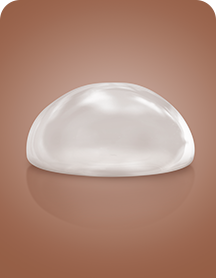
Silimed offers a wide range of implants that allow you to customise your augmentation based on your circumference and the breast shape you desire.
Designed to adapt to the biotype of each woman with:
- Anatomical, round and conical implants
- Up to 4 different projections: low, average, high and extra high.
- Geometries adapted to a narrow, wide or average chest
This collection is great for achieving objectives such as 90B, 90C or 90D while maintaining a natural result.
-
Silimed surfaces: safety and technology
Silimed has 4 different surfaces, making it possible to adapt the implant to the technique and the patient’s body:
-
Traceability and safety
All Silimed implants include:
- Patient identification card
- Serial number
- European CE certification
This guarantees transparency and safety in the long term.
Tips for keeping your size 90 operated breasts firm and natural
An attractive result doesn’t just depend on the surgery: it’s also about the subsequent care and follow-up.
Exercises and routines to take care of your breasts
- Maintain good posture
- Avoid sudden changes in weight
- Use appropriate bras
- Stick to the check-ups and controls established by your surgeon
- Avoid direct impacts in the area
At Silimed, we recommend following the guidelines indicated by your doctor, carrying out the regular check-ups and care explained to you as a precautionary and follow-up measure. This will enable the early detection of possible anomalies or complications.
- European Committee for Standardization. (2018). EN 13402: Size designation of bras and related garments.
- Tebbetts, J. B. (2002). A system for breast implant selection based on patient tissue characteristics and implant-soft tissue dynamics. Plastic and Reconstructive Surgery, 109(4), 1396–1409. https://doi.org/10.1097/00006534-200204010-00030