
Microtextured prostheses: benefits and results
Microtextured prostheses are one of the most balanced options for patients seeking natural results.
What are microtextured prostheses?
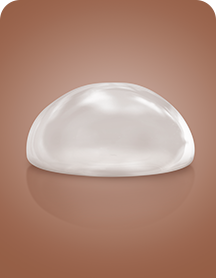
Microtextured prostheses are prostheses where the surface has a micro-texture, with a microscopic roughness of between 10 µm and 50 µm, designed to enhance adherence to stabilise the implant in the ideal position of the breast pocket.
After the test developed in the North-east Biomaterials Evaluation and Development Laboratory (CERTBIO) of the Federal University of Campina Grande (UFCG), in the Academic unit of Materials Engineering (UAEMa), demonstrated that the arithmetic average roughness of the Silimed True Texture® surface is approximately 28 µm, which is classified as microtextured, according to the ISO 14607 standard².
Benefits of the micro-texture for attachment and the result
The Silimed True Texture® microtextured prostheses offer a range of benefits:
- Improved scientific backing in terms of safety and long-term predictability1.
- Enhanced implant stability, reducing rotation and movements, especially in anatomical prostheses1.
- Anatomical muscle integrity. This reduces the need for manoeuvres to stabilise the implant1.
- Controlled attachment to the tissue, thanks to our own exclusive manufacturing gas diffusion technique to form an open-pore structure within the membrane with no negative imprint, sugar or loss of sugar or salt.
These benefits translate into a more natural-looking result and long-term stability.
Cases in which microtextured prostheses are recommended
Microtextured prostheses are often recommended in the following surgical interventions:
- Primary or secondary breast augmentations
- Primary breast reconstruction
Although, as we know, each case, each patient and each surgeon is unique and there are other types of prostheses available.
Microtextured vs smooth prostheses
Microtextured prostheses and smooth prostheses have a different type of surface.
This is the main difference between the two. According to the ISO 14607:2018 standard, smooth breast prostheses have an arithmetic average roughness of under 10 µm and microtextured prostheses, as we said above, between 10 µm and 50 µm.
Durability and feel of microtextured prostheses
Although the medical community hasn’t yet determined what the durability of breast prostheses is, there are multiple variables that can affect their lifecycle. Silimed establishes an average implant lifecycle of 10 years, although this will depend on each patient’s individual case and factors such as anatomy, state of health and lifestyle5,6,7,8.
- True Texture® prostheses retain their soft feel thanks to the combination of a microtextured surface and HSC (high-strength cohesive gel) for the Standard line and HSC+ for the BioDesign Collection line.
- These gels have a softer degree of penetration with increased consistency2, enhanced gel integration with the membrane2, as well as a maximum gel elasticity index2 leading to that lighter, softer feel and creating a more natural-looking breast.
Potential complications and side-effects
The scientific literature indicates that Silimed True Texture® microtextured prostheses can cause complications, just like any other implant, including:
- 9% rate of capsular contracture in 10 years3
- 1.2% rate of seroma or build-up of fluid3
- 0.67% rate of rupture4
How to minimise risks with medical follow-up
With the right choice of surgeon, it will be they who assess the specific needs and post-surgical checks, according to the type of intervention and patient. Medical follow-ups are essential for optimal recovery. Follow all the instructions given, especially as regards scars and treatment.
This is the best way to avoid complications and infections.
The post-operative assessment makes it possible to detect any issues early, such as:
- Capsular contracture
- Local lymphoedema
- Delayed seroma
- Changes to the position or shape of the implant
Silimed recommends regular check-ups and constant clinical monitoring to ensure the stability of the result.
Silimed’s microtextured prostheses
Silimed offers two main lines of microtextured prostheses:
- BioDesign Collection (True Texture®) → Designed to adapt to each patient’s biotype according to their anatomy and the relationship between the thorax and nipple, with four different projections ranging from low to extra-high, with HSC+ high-strength cohesive gel.
Increased projection for more pronounced breasts.
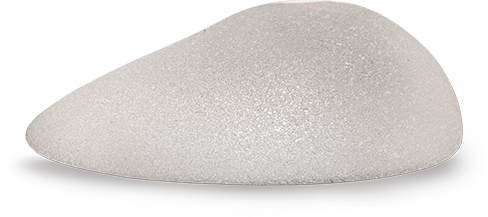
Breast augmentation without making the chest stand out excessively, giving a more natural appearance.
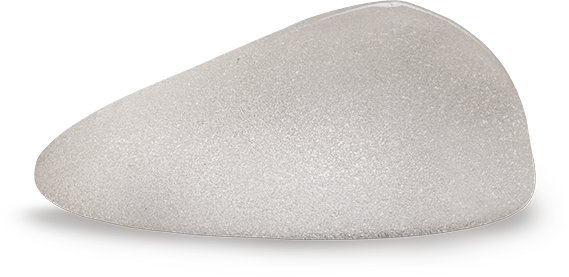
To fill the upper part of the breasts. For tall, slim women with a long, narrow chest.
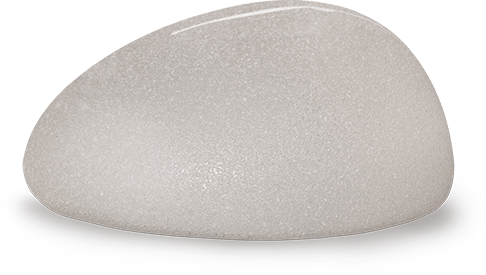
To fill the lower part of the breasts. For women with a shorter, broader chest.
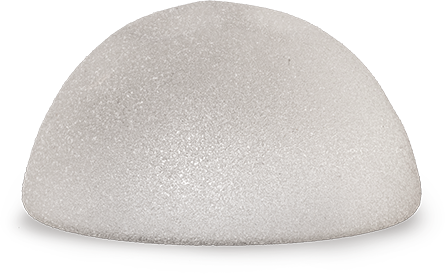
2. Standard Line (True Texture® Extra Low) → Round implant with a round base and the extra low projection, ideal for patients seeking a natural result with a more discrete upper pole. Based on HSC cohesive gel with low penetration2.
Our new microtextured implant: Standard Extra Low
Silimed is expanding its Standard line portfolio with these new microtextured prostheses with a unique and exclusively Extra Low projection:
- Wider base
- Extra low projection, the lowest in Silimed’s European portfolio
- Increased naturalness
- Optimised stability
- HSC gel for a realistic, softer feel
Indicated for patients seeking a discrete result on the upper pole and ideal for primary or secondary breast augmentations, as well as primary reconstructions.
Microtextured prostheses: the best option for your breast augmentation?
There is no better or worse option; it’s about the right option for the patient, personalised to each individual case. The final choice depends on:
- The patient’s anatomy
- Lifestyle
- Expectations and cosmetic needs
- Recommendation of your plastic surgeon
Microtextured prostheses are an excellent option for patients seeking increased stability, a more defined shape and a long-lasting, safe result1.
- Busnardo, F. Gemperli, R. (submitted). Why do we continue using microtextured breast prostheses? A choice based on scientific evidence. European Journal of Plastic Surgery
- Kinney, B. M., Jeffers, L. L. C., Ratliff, G. E., & Carlisle, D. A. (2014). Silicone Gel Breast Prostheses: Science and Testing. Plastic and Reconstructive Surgery, 134(1 Suppl), 47S–56S.
- Stevens WG, Calobrace MB, Alizadeh K, Zeidler KR, Harrington JL, d’Incelli RC. (2018). Ten-year Core Study Data for Sientra’s FDA-approved round and shaped cohesive gel prostheses. Plastic and Reconstructive Surgery.
- Massiere-y-Corrêa, W.E. (2025). Evaluation of the asymptomatic rupture of breast prostheses filled with Silimed silicone gel. Revista Brasileira de Cirurgia Plástica (RBCP) – Brazilian Journal of Plastic Surgery, 40, s00451809393. https://doi.org/10.1055/s-0045-1809393
- Internal document, Silimed usage instructions (e-IUP-001-01-P-E)
- Internal document, Silimed usage instructions (e-IUP-001-02-LN-E)
- Internal document, Silimed usage instructions (e-IUP-001-01-T-EC)
- Internal document, Silimed usage instructions (e-IUP-001-01-l-EC)